What's in a name?
Species named after Clare Alumni
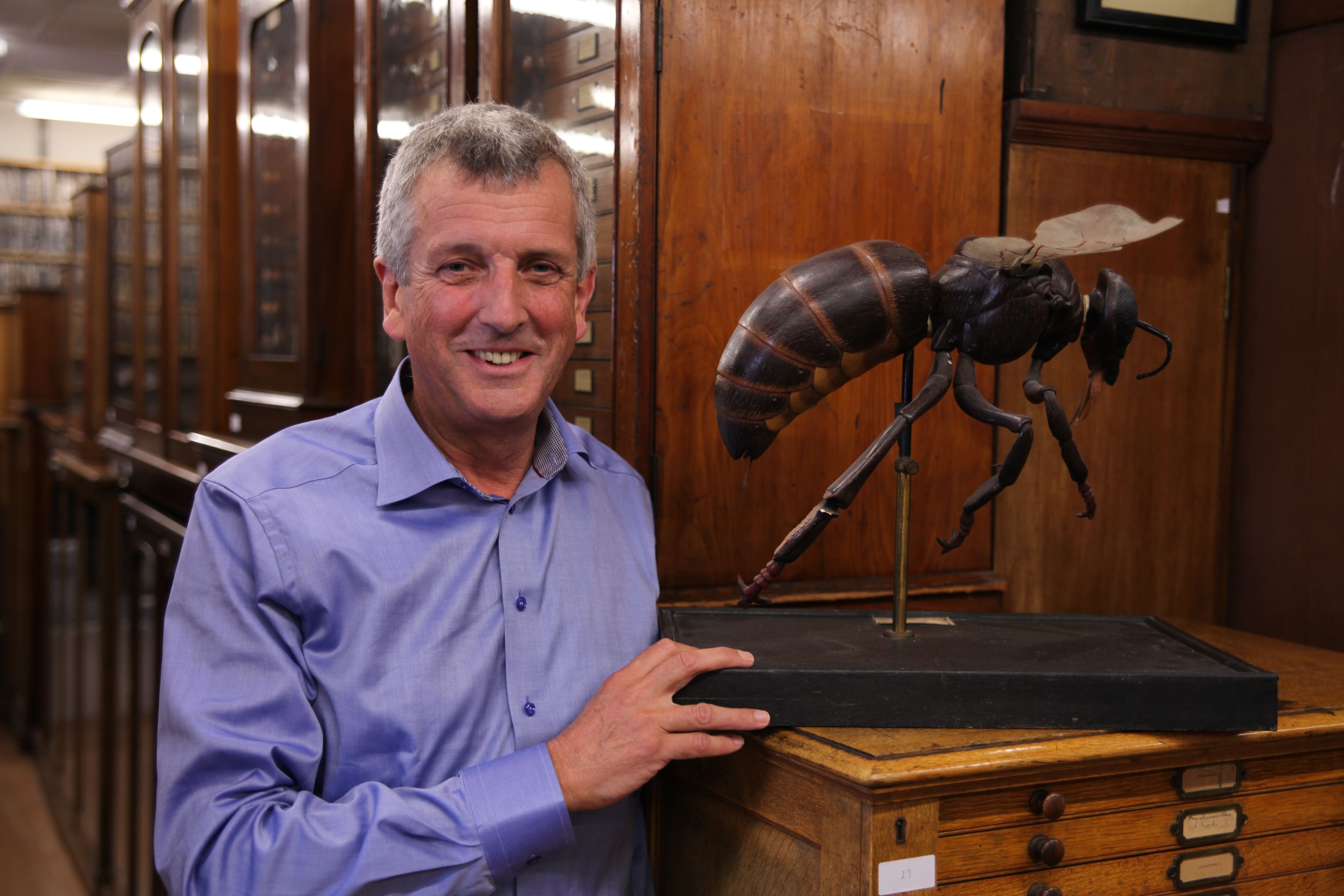

I lept out of the boat, which was still close to shore, caught some specimens in my small pond net and transferred them into small tubes of alcohol (always ready to hand).
Knowing that you have discovered a new animal species is ridiculously exciting. In 1989, while on field-work in India, I had just boarded a ferry at Elephanta Island in Mumbai Harbour when I noticed some ocean skaters – a type of insect I was studying – skimming across the surface of the sea. I leapt out of the boat, which was still close to shore, caught some specimens in my small pond net and transferred them into small tubes of alcohol (always ready to hand). Back at the Gateway to India, I examined them with my hand-lens and knew immediately that they were a new species. The male genitalia were totally unlike those of the only two other species of ocean skater recorded from this part of India. Three years later, a Danish taxonomist kindly allowed me to join him in giving it a name: Halobates elephanta Andersen & Foster, 1992.
Vladimir Nabokov, the great Russian novelist and lepidopterist, perfectly captures the excitement of finding and naming a new species in his 1942 poem A Discovery. In contrast to the Romantic poets, who thought that naturalists, in Wordsworth’s phrase, “murder to dissect”, Nabokov celebrates the excitement of discovery, the beauty of dissection, the majesty of pinned museum specimens, and the durability of a species name. Here are the last three verses:
I found it and I named it, being versed
in taxonomic Latin; thus became
godfather to an insect and its first
describer – and I want no other fame.
Wide open on its pin (though fast asleep),
and safe from creeping relatives and rust,
in the secluded stronghold where we keep
type specimens it will transcend its dust.
Dark pictures, thrones, the stones that pilgrims kiss,
poems that take a thousand years to die
but ape the immortality of this
red label on a little butterfly.

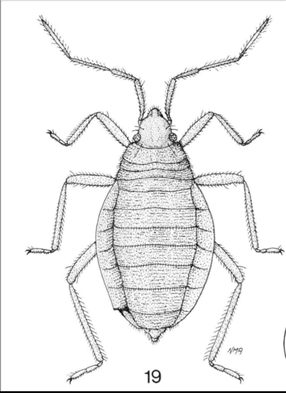
Dawinivella fosteri
Dawinivella fosteri

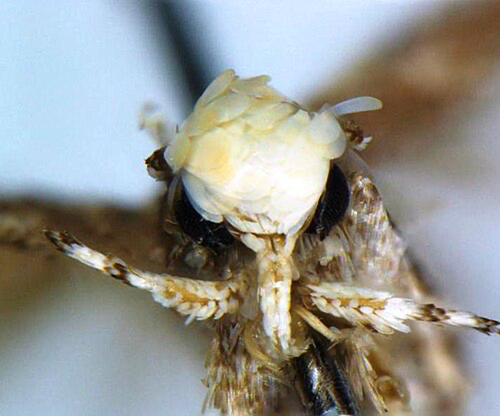
Neopalpa donaldtrumpi
Neopalpa donaldtrumpi

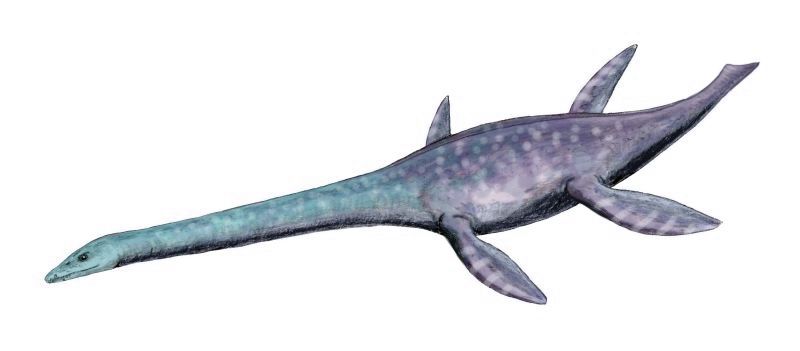
Plesiosaur Attenborosaurus
Plesiosaur Attenborosaurus
Species are often named after people – think of the Glanville Fritillary, Przewalski’s Horse or Neopalpa donaldtrumpi – but this practice did not take off until after the Linnaean revolution in biological nomenclature in the mid-18th century. The crucial element in Linnaeus‘s approach was that the names of species should no longer act as physical descriptions but should simply serve as labels by which a species might universally be addressed. Natural philosophers were now free to name species after people, or indeed after more-or-less whatever took their fancy. There were nevertheless rules to obey when coining the species name: it had to consist of two words (a binomen), the first being the genus name, the second being the specific epithet, which could be an adverb, a genitive noun, or a noun in apposition, obeying the basic rules of Latin, the universal language of the day.
There are three basic strategies for persuading a taxonomist to name a species after you:
1. Become an international celebrity - a sports icon, a popstar, a politician – of such immense renown that taxonomists will be unable to resist naming something after you. Lady Gaga is immortalised in a genus of ferns, a tree-hopper, a parasitic wasp, and an extinct even-toed ungulate.
2. Be a field biologist, discover a new species, and send it to the relevant taxonomist in the hope that they might be sufficiently grateful to name it after you.
3. Contrive to be related to or extremely pally with a hard-working taxonomist, who might reward your friendship by naming something after you. Note that actually becoming a taxonomist is not an option: it is not permissible to name a species after yourself. However, the original describer’s name does appear in the official full name of every species, as in the ocean-skater discussed above: this provides an alternative route to immortality.
A final vital piece of advice if you decide to follow options 2 or 3: make sure you focus on a species-rich group of organisms, such as rove-beetles, scuttle flies, or nematodes. Don’t waste your time on birds or mammals. More than 10,000 new species of insects are described each year, more than one per hour; for birds it is more like 5 new species each year.
I have been able to find four Clare Fellows with species named after them: two Honorary Fellows (Sir David Attenborough, James Watson); an Emeritus Fellow (me); and an Official Fellow (Edgar Turner). David Attenborough sustains the honour of the College to a quite magnificent degree: over 50 species bear his name (usually with the specific epithet attenboroughi), well ahead of any other living person. These species are impressively diverse: they include not just insects, although there are 20 of these, but also an oceanic protozoan, a flat lizard, three birds, three spiders, a comb jelly, an extinct kitten-sized marsupial, a giant pitcher plant, and a Welsh hawkweed. His favourite is the extinct Plesiosaur Attenborosaurus, one of a small number of genera that bear his name.
Former Honorary Fellow, James Watson, had to settle for a shared name, Bothiopsis watsoncrickii, which is – rather wonderfully – a viper.
Edgar Turner and I, not being international celebrities, have followed Option 2 of stumbling across new species whilst doing field-work. Ed’s species (Orthomeria turneri) is a stick-insect from Borneo. Mine include a biting midge from the Seychelles, a marine bug from the Galápagos Islands, a scuttle-fly from the high canopy of the Bornean rainforest, and a water-strider from the coral shores of Fiji. The Galápagos bug is especially pleasing since it is the type species of a totally new genus Darwinivelia fosteri. How awesome to find myself tightly linked, as a specific epithet, to a genus named after Charles Darwin.
Taxonomists, part of whose job is to name species, sometimes claim that theirs is the “oldest profession”. And indeed, the first task entrusted by God to Adam in the Garden of Eden was to name the birds of the air and the beasts of the field. God realised that creation was not enough: humans would value only what they themselves had named.
Dr William Foster
Former Curator of Insects at the University Museum of Zoology

 Built with Shorthand