
Fellow's Publications


Neil Andrews
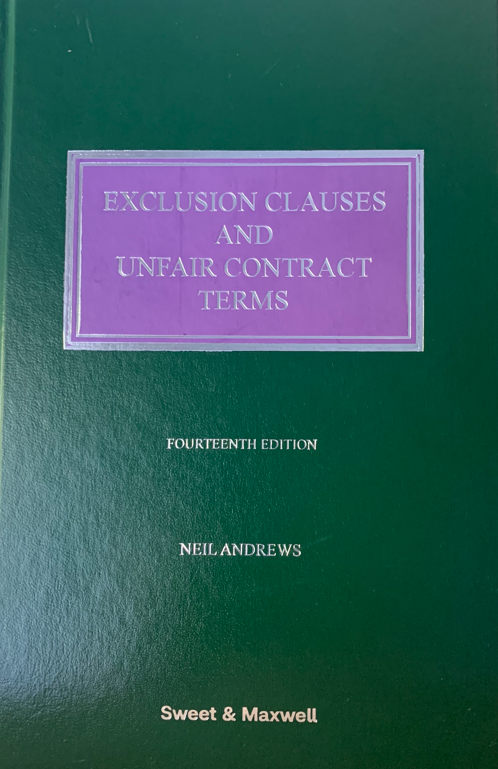
Andrews, N. (2025) 'Exclusion Clauses and Unfair Contract Terms’. 14th edition, Thomson Reuters, 2025).

Paul Cartledge
Cartledge, P (2024) ‘Was there an ancient Hellenic “Olympic Ideal”?’ Comparative Literature Review 2 1-11 [acceptance speech, Hon. PhD, University of Thessaloniki, Greece]
Maciej Dunajski
Dunajski, M. and Moy, T. (2024) `Heavenly metrics, hyper-Lagrangians and Joyce structures' arXiv:2402.14352. Journal of the London Mathematical Society. 110. 13009
Together with my PhD student Tim Moy (also Clare!) we have shown that the 21st century problems in high tech algebraic geometry can be solved using an apparatus of heavenly spaces developed in general relativity in mid 1970s.
Paul Edwards
Edwards, P.A.W. (2025) 'Cancers are like wounds because they are damaged tissue' Openaccessgovernment July 2025 pp144-5. DOI: https://doi.org/10.56367/OAG-047-12099
Patricia Fara
Fara, P. (2024) ‘Myth 3: That Charles Darwin was not directly influenced by the evolutionary views of his grandfather Erasmus’, in Kampourakis, K (ed.) Darwin mythology: Debunking myths, correcting falsehoods. Cambridge: Cambridge University Press, pp. 36-46.
Charles Darwin publicly denounced his grandfather Erasmus, yet he studied his writings on evolution closely, wrote his biography and praised him for possessing “the true spirit of the philosopher”. Their theories show some striking similarities, but it was in Charles’s interests to distance himself from this discredited relative.
William Foster
Field,J., Savill, C., and Foster, W.A. (2025) ‘Memory and the scheduling of parental care in an insect population in the wild.’ Current Biology, 35(11), pp 2740-2745.e3.
Research on Surrey heathland reveals that wild digger wasps can make impressively sophisticated scheduling decisions about feeding their young. They can remember the precise locations of up to 9 nests simultaneously, feed their young in age order, adjusting the order if one dies, and delay feeding offspring that were initially given more food.
Simon Franklin
Franklin, S., Reich, R. and Widdis, E. (eds.) (2024) 'The New Cambridge history of Russian literature' doi: https://doi.org/10.1017/9781108655620.
This essential new guide to Russian literature combines authority and innovation in coverage ranging from medieval manuscripts to the internet and social media. Instead of a conventional approach based on authors, works, or periods, it offers a fresh approach to literary history, not as one integral narrative but as multiple parallel histories. Each of its four strands tells a different story of Russian literature according to its own criteria.
Sean Hartnoll
Hartnoll, S.A. and Yang, M. (2025) 'The conformal primon gas at the end of time', Journal of High Energy Physics, 07, p. 281.
Tim Lewens
Lewens, T. (2024) 'Cultural Selection'. Cambridge: Cambridge University Press
People learn in ways that are influenced by others. As a result, techniques, traditions, scientific theories and many other learned items are elaborated over time in ways that build on the achievements of previous generations. Culture therefore shows a pattern of descent with modification that reminds many theorists of Darwinian evolution. This raises the question of whether ‘cultural selection’—a mechanism akin to natural selection, albeit working when learned items are passed from demonstrators to observers—can explain how various practices change as the years go by. This is the central question of this short book.
Fred Parker
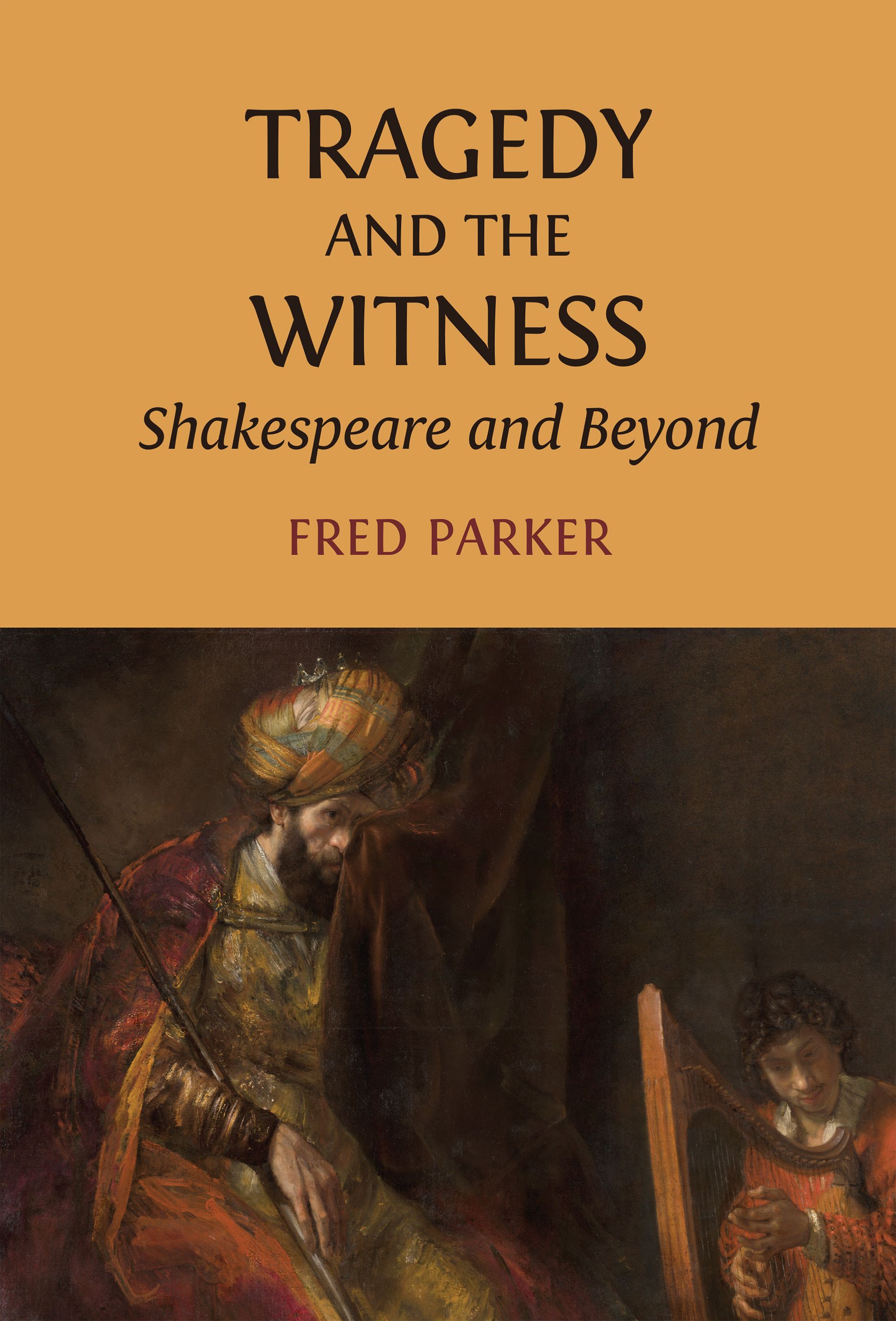
Parker, F. (2025) 'Tragedy and the Witness: Shakespeare and Beyond'. (Available free online at https://www.openbookpublishers.com/books/10.11647/obp.0435)
Focuses on how the tragic protagonist - someone in extremis - struggles to be truly understood. How can traumatic experience be 'held' by others? What is involved in giving hospitality to the alien? And what are the specific resources of theatre in representing estranged states of mind?

Gordon Ogilvie
Ogilvie, G. I., 2025 ‘Gravitational instability and affine dynamics of gaseous astrophysical discs.’ Monthly Notices of the Royal Astronomical Society 539, 355–375. doi:10.1093/mnras/staf462
Lawrence Paulson
Manuel Eberl, Anthony Bordg, L. C. Paulson and Wenda Li. (2024) ’Formalising half of a graduate textbook on number theory’, Yves Bertot, Temur Kutsia and Michael Norrish (editors), 15th International Conference on Interactive Theorem Proving, 40:1–7.
Apostol’s Modular Functions and Dirichlet Series in Number Theory is a graduate text covering topics such as elliptic functions, modular functions and approximation theorems. The paper describes the formalisation of several chapters of this material, using the proof assistant Isabelle/HOL to check the mathematics right down to the foundations.
Graham Ross (Director of Music)
Ross, G. (2025) ‘Palestrina Revealed’. Harmonia Mundi HMM905375. Choir of Clare College, Cambridge, Graham Ross, director

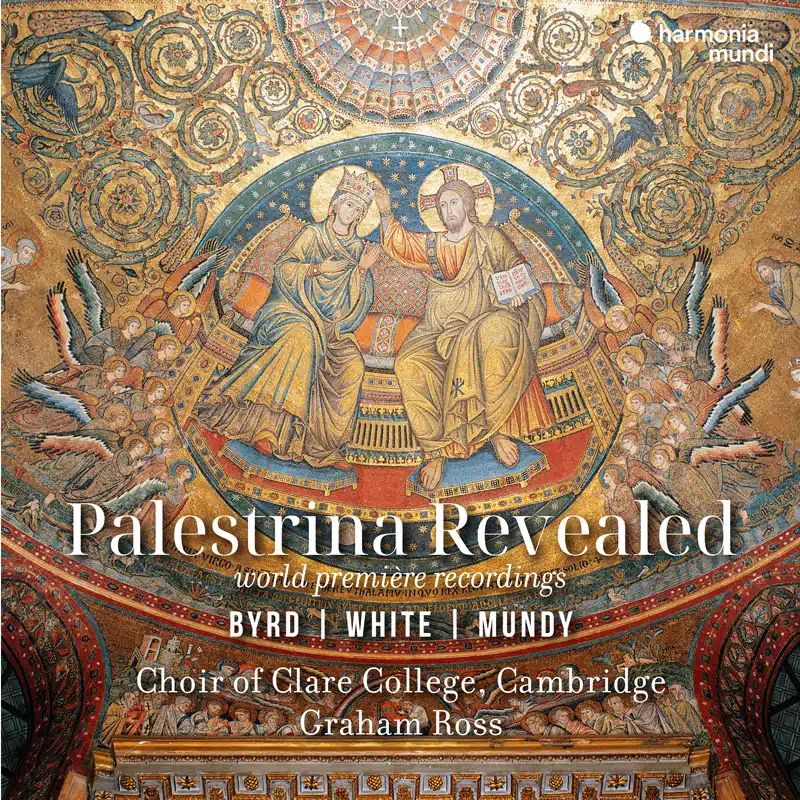
Graham Ross and the Choir of Clare College, Cambridge celebrate the 500th anniversary of Palestrina’s birth in style, recording for the very first time an album of outstanding works by the Roman master that are still little-known. To add resonance to their programme, they pair settings of the same texts by three of Palestrina’s English contemporaries, William Byrd, Robert White, and William Mundy.
Alison Sinclair
Sinclair, A. (2024) (editor and introduction). 'Cultures of the Popular in the Modern Hispanic World'. Tamesis Studies in Popular and Digital Cultures 5.

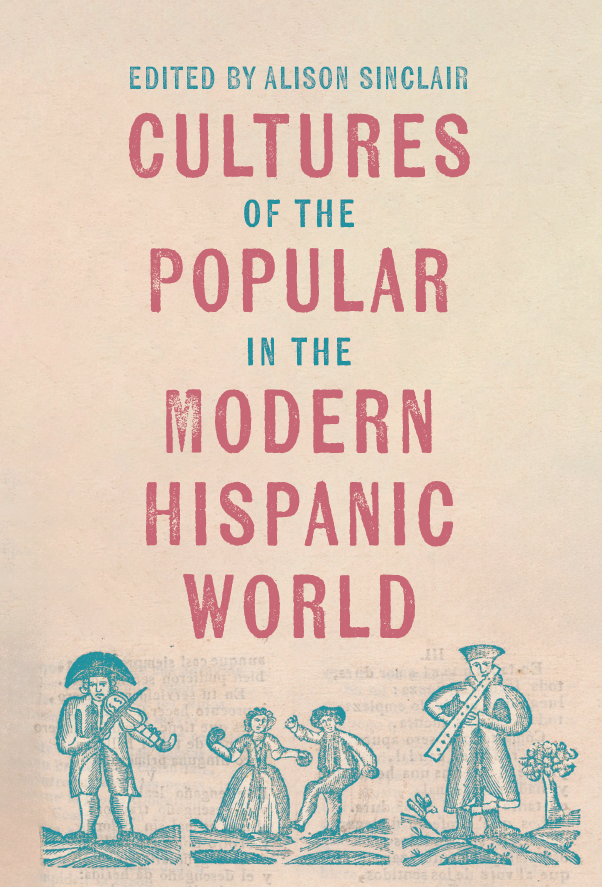
Ephemeral cultures circulating on grubby pieces of paper in Spain and Latin America between the 16th and 20th centuries show convergence and difference in the ways the popular is portrayed and its (real or imagined) tastes sketched out. Detailed case-studies and geographical and chronological overviews alike demonstrate the major current and future impact of digital humanities for research in this field.
Colin Smith
Smith, C. and Torrente-Murciano, L. (2025) 'Cost efficiency versus energy utilization in green ammonia production from intermittent renewable energy'. Nature Chemical Engineering, pp.1-12
Decarbonizing the chemicals industry is critical to achieving Net Zero goals. In this work, we evaluate the cost of using intermittent renewable energy to electrify Power-to-X chemical processes and provide a framework for comparing the time-dependent value of solar and wind energy across sectors to facilitate rapid and economical decarbonization.
Roel Sterckx
Sterckx, R. (2025) 'Fish Farming in Pre-modern China: A study and translation of two texts.' T’oung Pao 111.3-4: 353-396.
Jon Sterling
Sterling, J. (2025) 'Toward a geometry for syntax,' in Chapman Mathematical Notes. Cham: Springer Nature Switzerland, pp. 391–432.
The recollement of generalised spaces is deployed here as a general framework to make explicit and verify the special properties of syntax that are the key to implementing computerised assistants for the formalisation of mathematics. An invited contribution to The Mathematical and Philosophical Legacy of Alexander Grothendieck.
Sam Stranks
Dubajic, M., Neilson, J.R., Klarbring, J., Liang, X., Bird, S.A., Rule, K.C., Auckett, J.E., Selby, T.A., Tumen-Ulzii, G., Lu, Y., Jung, Y.-K., Chosy, C., Wei, Z., Boeije, Y., Zimmermann, M. v, Pusch, A., Gu, L., Jia, X., Wu, Q., Trowbridge, J.C., Mozur, E.M., Minelli, A., Roth, N., Orr, K.W.P., Mahboubi Soufiani, A., Kahmann, S., Kabakova, I., Ding, J., Wu, T., Conibeer, G.J., Bremner, S.P., Nielsen, M.P., Walsh, A., Stranks, S.D. (2025) 'Dynamic nanodomains dictate macroscopic properties in lead halide perovskites'. Nature Nanotechnology 20, 755–763. https://doi.org/10.1038/s41565-025-01917-0
Discovery of dynamic nanodomains in lead halide perovskites, which stack like microscopic Jenga bricks which the shape and extent of these domains dictated by the small cation component. These local structures are transiently forming and disappearing in the material, leading to bending of band edges and modulation of charge carrier paths. These effects have a significant influence on the macroscopic properties of emerging solar cells and optoelectronic devices.
Dorothy Thompson
Thompson, D.J. (2025) ‘The Cleruchy in Hellenistic Egypt’. Vestnik Drevney Istorii 85/1 (2025), 135-145
Ed Turner
Marsh, C.J., Turner, E.C., Blonder, B., Bongalov, B., Both, S., Cruz, R.S., Elias, D.M.O., Hemprich-Bennett, D., Jotan, P., Kemp, V., Kritzler, U.H., Milne, S., Milodowski, D.T., Mitchell, S.L., Pillco, M., Nunes, M.H., Riutta, T., Robinson, S.J.B., Slade, E.M., Bernard, H., Burslem, D.F.R.P., Chung, A.Y.C., Clare, E.L., Coomes, D.A., Davies, Z.G., Edwards, D.P., Johnson, D., Kratina, P., Malhi, Y., Majalap, N., Nilus, R., Ostle, N.J., Rossiter, S.J., Struebig, M.J., Tobias, J.A., Williams, M., Ewers, R.M., Lewis, O.T., Reynolds, G., The, Y.A., & Hector, A. (2025) ‘Tropical forest clearance impacts biodiversity and function, whereas logging changes structure’. Science, 387, 171-175. DOI: 10.1126/science.adf9856
This paper brings together a large dataset, collected by multiple research groups, investigating the impacts of habitat disturbance on tropical environmental conditions, biodiversity, and ecosystem functions in Southeast Asian rainforests. We find that environmental conditions and some aspects of biodiversity are sensitive to change, while ecosystem functioning is surprisingly robust.
Toby Wilkinson
Wilkinson, T. (2024) 'The Last Dynasty: Ancient Egypt from Alexander the Great to Cleopatra'. London/New York: Bloomsbury/Norton
Drawing on the latest research and archaeological discoveries, this book tells the story of the Ptolemies, the Greek-speaking kings of Egypt who ruled the Nile Valley for three centuries until its absorption into the Roman empire. It is as dramatic and compelling a period as any in Egyptian history.
Nigel Woodcock
Woodcock, N.H. (2025) ‘The choice of local or imported building stone in English medieval churches; a south Cambridgeshire case study.’ Geoheritage, 17, https://doi.org/10.1007/s12371-025-01069-6.
A survey of 124 medieval churches in south Cambridgeshire. The typical church has rubble walls of local fieldstone, with dressings of either Clunch (hard Chalk) or more costly Barnack Limestone from 60 km away. The amount of Barnack stone is probably a good indicator of a church’s medieval wealth.
To read our full Fellowship list, click here.

 Built with Shorthand