Why Humanities Still Matter
Interview with Professor Jocelyn Wyburd

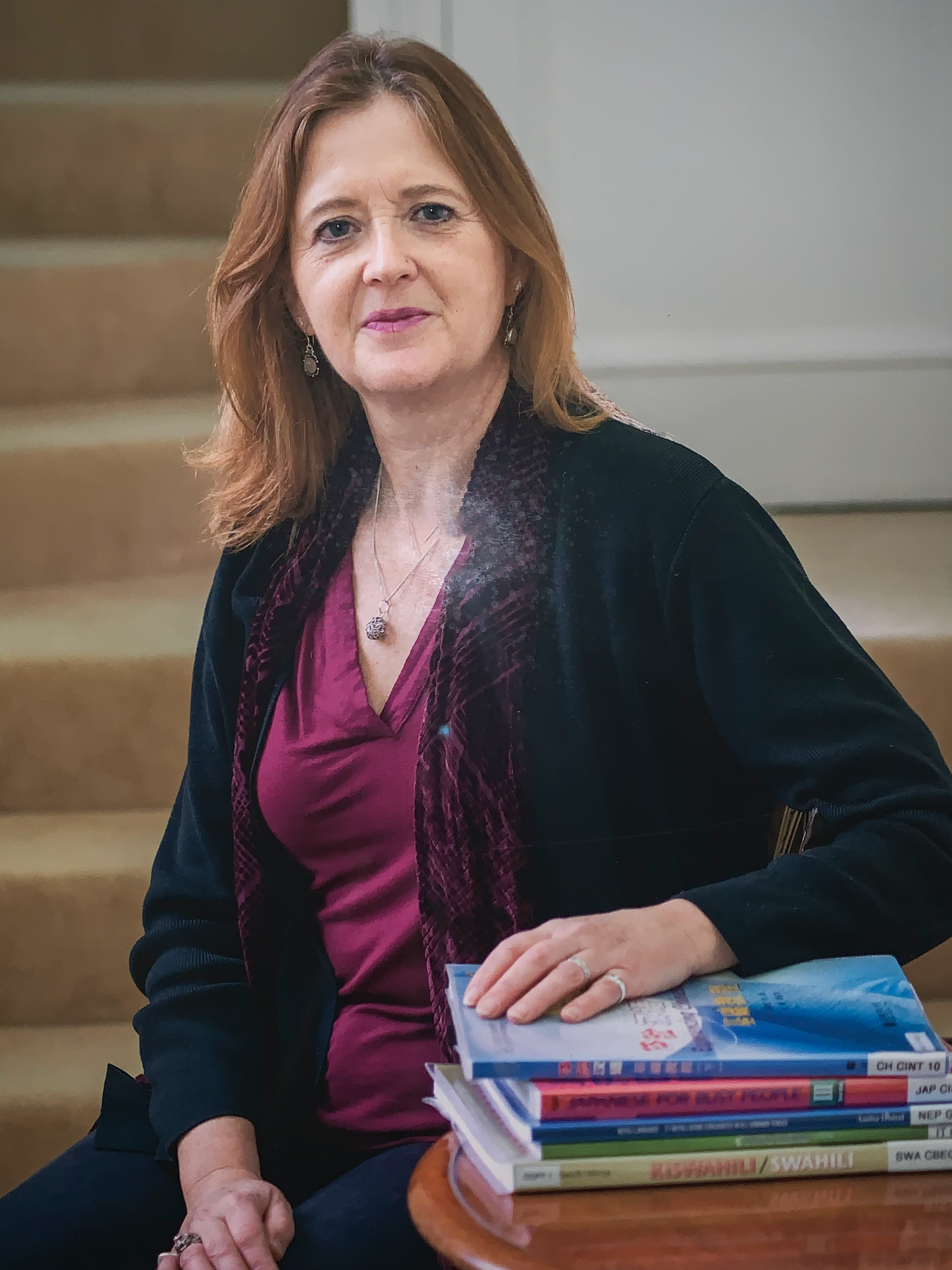
Professor Jocelyn Wyburd (Fellow and Dean of Students) is the Head of the School of Arts & Humanities, one of the six academic divisions of the University of Cambridge. The School comprises the Faculties of Architecture & History of Art, Asian & Middle Eastern Studies, Classics, Divinity, Modern & Medieval Languages and Linguistics, Music, and Philosophy, CRASSH (the Centre for Research in Arts, Social Sciences and Humanities), the Language Centre, and the Institute for Technology & Humanity.
She spoke to the Clare Review about the challenges facing Arts & Humanities, particularly modern languages, and the benefits of language learning for employment in the global economy.

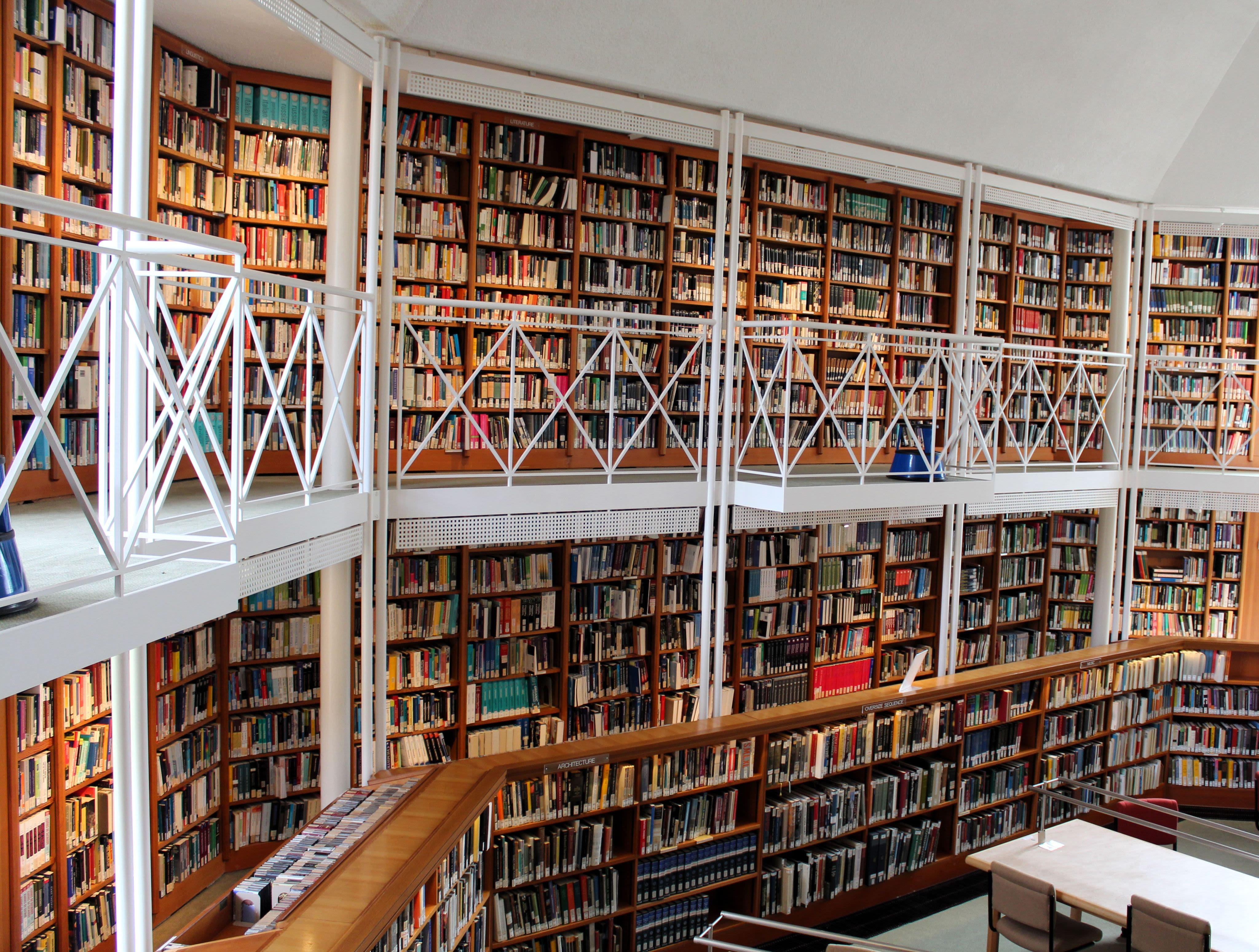
“As speakers of the world’s dominant language, English speakers often feel little urgency to learn other languages. But this convenience comes at a cost. In many contexts, English as a lingua franca (ELF) is now a vehicle for communication between numerous different cultures, with English-speaking nations not necessarily represented. But when they are, there is research to show that anglophones are often the least comprehensible!”
Jocelyn explains, “Speaking a language is much more than learning how to construct a sentence: it encompasses body language, expression, metaphor, culture, history and more. Anglophones who have not learned other languages are often not able to adapt their communication style to work with interlocutors from other cultures and linguistic backgrounds, even when the language of communication is English. There is a widespread underestimation of the skill involved in cross-cultural communication. Just because others can speak English doesn’t mean they will. And even when they do, subtle layers of meaning may still be lost.”
So, when we send our graduates out into the world, are they equipped with the right tools to thrive? Jocelyn believes that they are – but argues that we must better articulate this: “Arts and Humanities graduates possess a distinctive suite of ‘soft skills’ – such as adaptability, negotiation, and cultural empathy – that are increasingly important in a globalised job market. Languages graduates can top that with their linguistic skills and the benefits of living and working or studying abroad.”
Jocelyn adds, “These competencies are often overlooked in favour of more technical qualifications. Yet reports such as The Right Skills by The British Academy show that Arts & Humanities graduates consistently develop strengths in communication, collaboration, critical analysis, and ethical reasoning – high-level skills that are essential for solving complex global problems.
Despite the benefits, Jocelyn points to major challenges: “Since 2002 the UK has seen a sharp drop in the study of Arts & Humanities, particularly starkly in language learning. A report from The Higher Education Policy Institute states that, by 2018, only 46% of 16-year-olds in England took a GCSE in a foreign language, and by 2024 just 2.97% of A-levels were in Modern Foreign or Classical Languages – fewer than in Physical Education. Applications for language degrees are also falling, especially in disadvantaged areas, raising concerns that languages and the wider arts and humanities will be studied by an ever-narrower cross-section of society.
A utilitarian mindset is dominating the higher education applicant landscape, not least because of the high levels of student debt. Prospective students are making increasingly pragmatic choices, favouring degrees that appear to lead directly to lucrative careers, particularly in STEM fields. As a result, applications to Arts & Humanities courses are dwindling.”
A passionate advocate for the Arts & Humanities in general, and modern languages in particular, Jocelyn concludes with a call to action: “Subjects like history, philosophy, and modern languages provide the context behind today’s most pressing debates – from the ethics of AI and global inequality to interpreting our colonial past. We cannot fully understand our own fast changing world without the humanities. It is time to reframe the identity of our Arts & Humanities and linguist graduates for employability in a global context.”
"There is a widespread underestimation of the skill involved in cross-cultural communication"

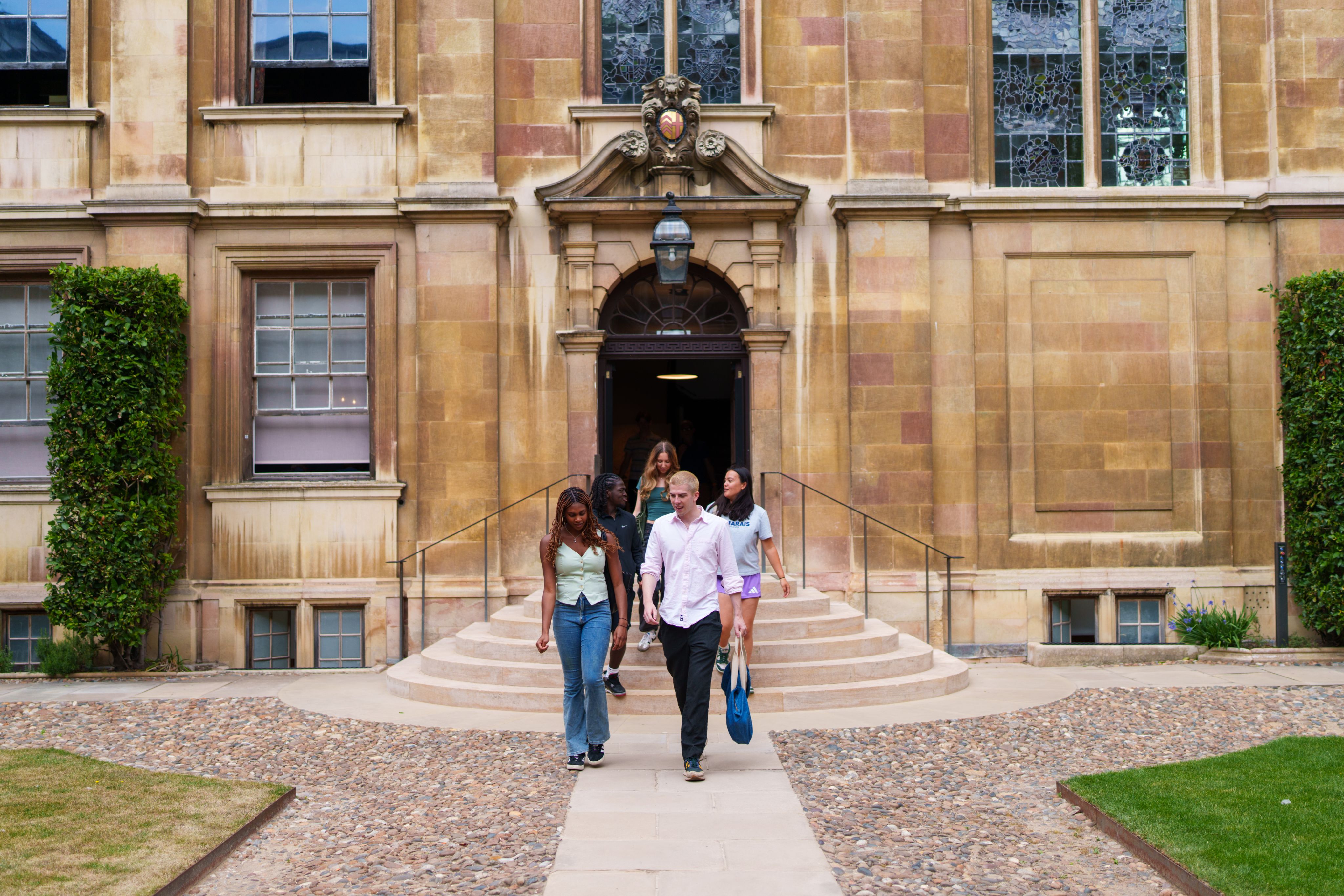
Professor Wyburd has served as Dean of Students for two years, following 12 years as a tutor. She sees very little problematic behaviour at Clare, reflecting its positive culture. However, students often away from home for the first time, may test boundaries as they learn from new experiences.
Asked to recall any specific incidents, Jocelyn mentioned a few low-level fines imposed for damage, complaints received about loud singing at night and visitors disrupting the sleep of others, fire hazards like candles and incense sticks in rooms, luckily only rarely leading to fire alarms being triggered by loose paper catching alight, but nothing more serious.
Memorable exceptions include students climbing onto the Master’s roof after the Lady Clare dinner, and some enthusiastic punters overloading the Clare de Lune with people (and bottles) only to lose the key in the process.
“Clare is a halfway house between home life and the real world. Students are here to make friends and have new experiences. It is a safe environment for them to make mistakes and then learn from them. My role is about finding the balance between supporting students to enjoy themselves and guiding them in respect of their responsibility to the College and its community. With sanctions or fines as a last resort”.

 Built with Shorthand