Exploring the College Archives
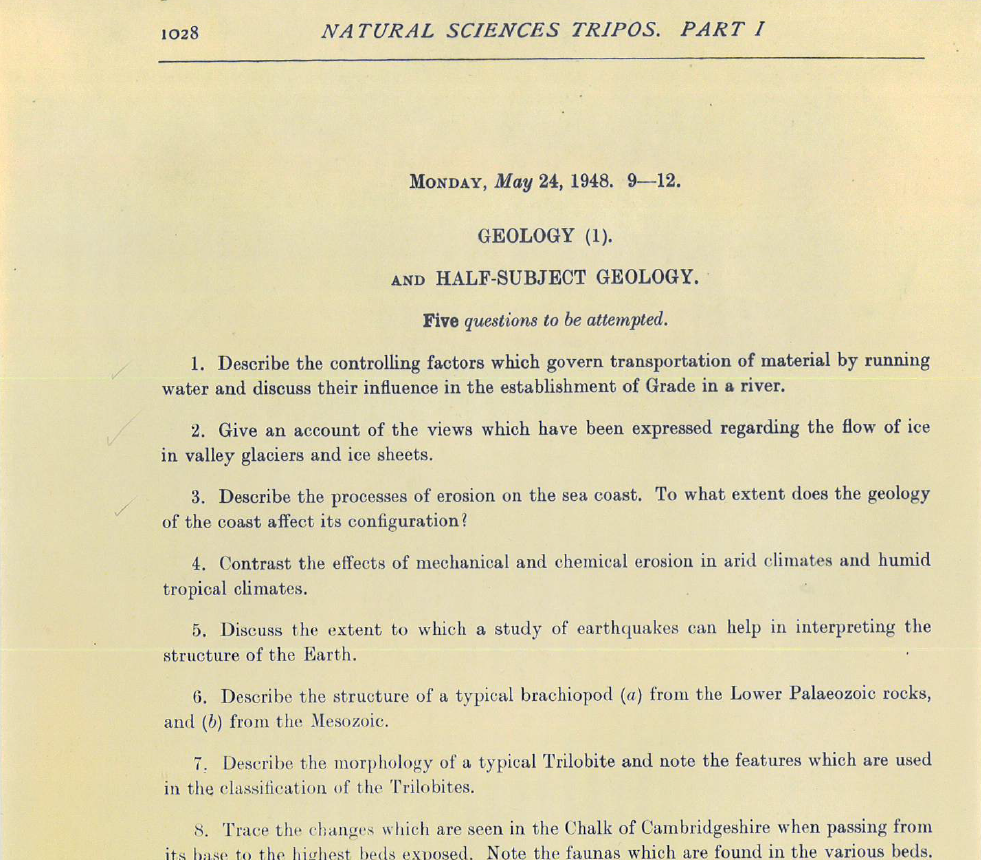

As Clare enters a new century, it seemed only fitting to step into our rich history by exploring the College Archives. The Archives preserve the documentary evidence of the history and life of the College. They include governance and administrative records, estate papers, and financial accounts. The Archives reflect the academic work of members of the College as well as the social side through records of College clubs and societies, letters, diaries, photographs and personal papers.
Clare Review spoke to the College Archivist, Katy Green, who joined Clare earlier this year. She is also currently the Archivist at Magdalene College and has previously worked at Northamptonshire Record Office, BP plc, and Jesus College. Her work at Clare is wonderfully varied, from answering enquiries and supporting visiting researchers to cataloguing records that range from 16th-century parchment manuscripts to digital materials.

Could you talk about a recent exciting collection that you have catalogued in the Archives?
“Shortly after I took up my new post as College Archivist at Clare, I received a phone call from the granddaughter of a notable alumnus called Noel Odell.
Odell was a geologist who began his career in the petroleum and mining industries. In his late thirties he transferred to academia and worked in Cambridge between 1931 and 1940, first as a research student and lecturer and then as a fellow commoner and director of studies at Clare. His research for his PhD (awarded in 1940) investigated the geology, glaciology, and geomorphology of north-east Greenland and northern Labrador. After the Second World War he established himself as a lecturer in geology at various universities worldwide, including Harvard, McGill, Peshawar University and the University of British Columbia – but it was in mountaineering that he made his name, with an ice route, two mountains, a lake and a glacier all being named after him.
Perhaps most famously he was a member of the third Mount Everest expedition which set out in 1924 with the aim of becoming the first to summit the highest mountain in the world. Odell spent two weeks living above 23,000 ft and twice climbed to 26,800 ft and higher, without supplemental oxygen. On 8 June 1924, two members of the expedition, George Mallory and Andrew Irvine, began their attempt to summit Everest. Odell reported seeing them at 12:50 p.m., climbing one of the major ‘steps’ on the north-east ridge, and ‘going strongly for the top’. The clouds then descended, and they were never seen again. There is no evidence to prove whether they reached the summit and they both died on the mountain.”
Why did Odell donate his work to Clare?
“After he left Clare, Odell had many teaching positions in universities around the world, but when he finally retired, he returned to Clare and in 1983, at the age of 92, was elected an Honorary Fellow. According to his granddaughter, he was delighted by this as he had always been very fond of Clare. Whilst clearing out her attic, she found his teaching notes and academic notebooks and felt that Clare would be the perfect place for them to go.”

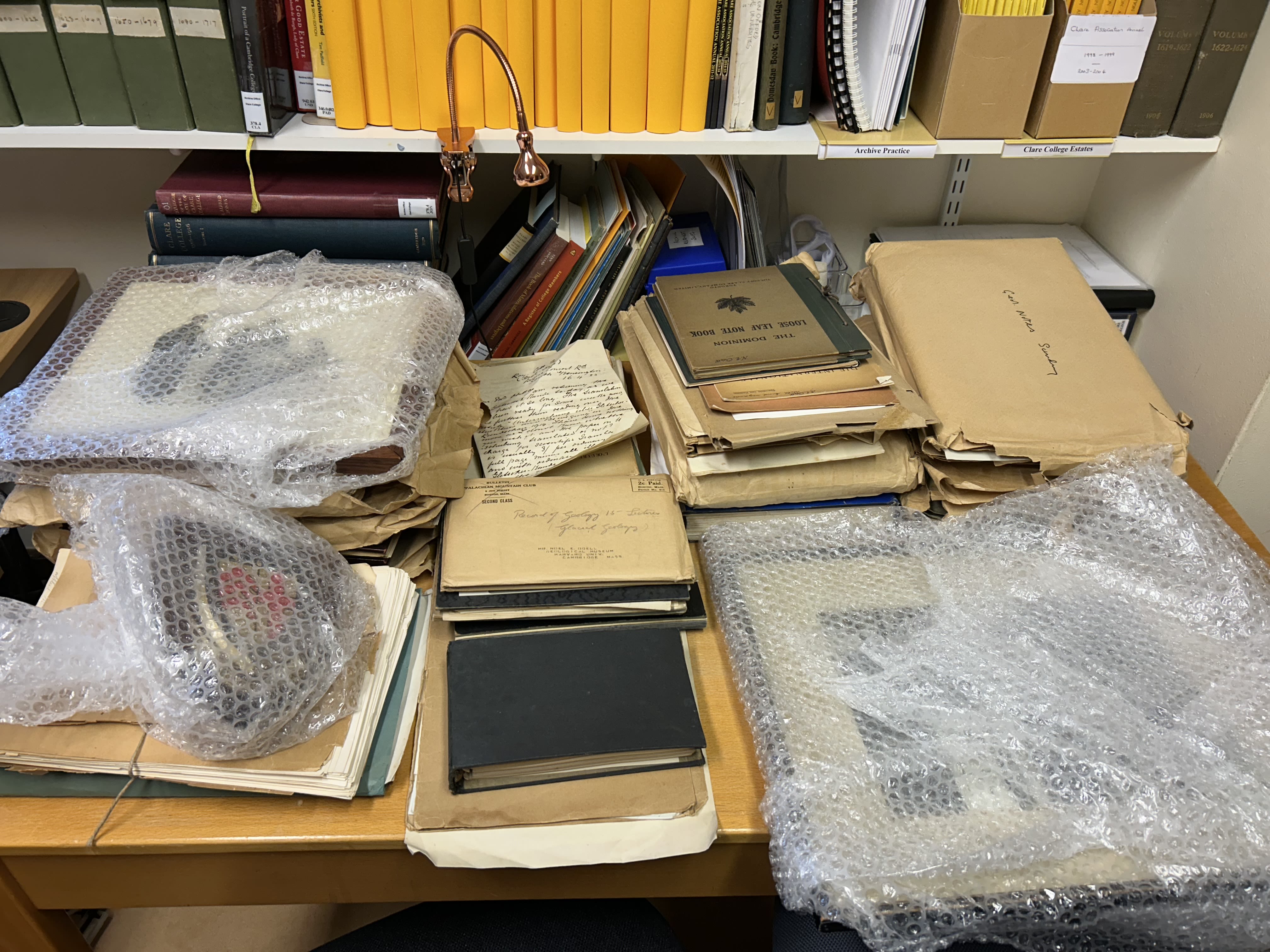
Before
Before

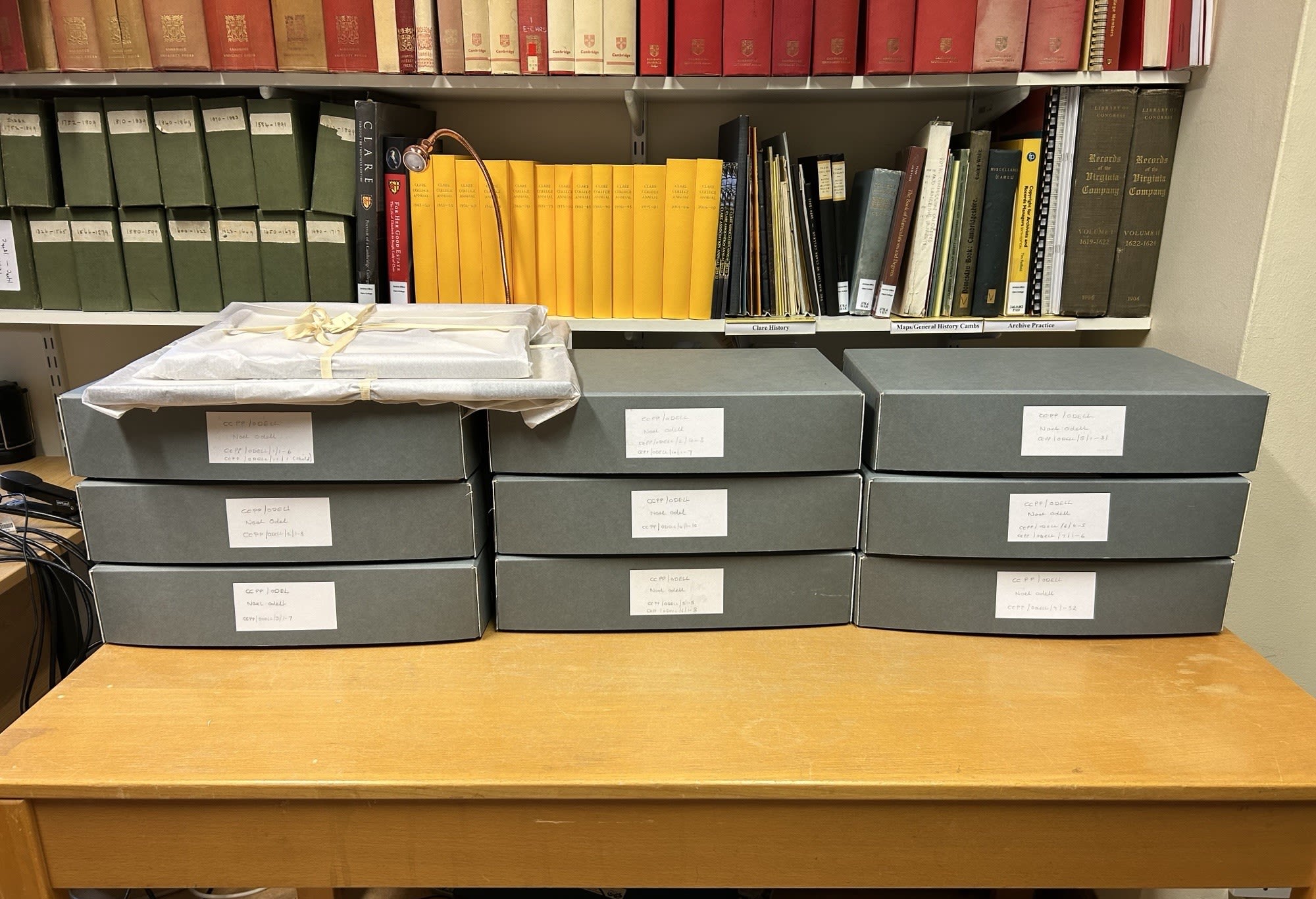
After
After
How did you take possession of the records?
“I drove to his granddaughter’s house to hear stories of him and to collect the records. They were put in boxes and wrapped with tissue paper to ensure they made it safely back to Clare. In archival work, it is important to record the original order of a collection as that can sometimes shed light on the working practices of the creator. On arrival at the office, an inventory of everything was made immediately, so that if things were disturbed, they could be put back to how they were when they arrived.”
“The next part of the process is to look through and understand the materials. This is where my knowledge of geological terms increased dramatically (it had been non-existent before, despite having worked for BP plc like Odell!). The records are then grouped into series, such as notebooks/correspondence/articles. Each document or file is then described in an entry in an online catalogue and if people are mentioned (such as those he was visiting or writing to), an ‘Authority Record’ is added. This is a brief biography to give the researcher extra context, which is always a fun part to create as so many people have led full and interesting lives."
How do you ensure the long-term preservation of documents?
“When archivists go through files, we remove rusty paper clips and pins and replace them with brass paperclips, to ensure they don’t rust or mark the paper. Next, they are put in acid free folders, tied up with archive tape and given a unique reference number. They are placed in acid-free boxes and put in the archive store on mobile racking. The final thing to do is to record the location. The Odell collection consists of 6 notebooks, 48 files, 63 offprints of articles, 2 pictures and a College shield, all housed in nine archive boxes.”
You can see the catalogue online via the Archives. To get in touch with the Archivist, please email archives@clare.cam.ac.uk.
The Archives provide a valuable insight into many aspects of the history of the College and College life from the 16th century to the modern day. We welcome donations from alumni of materials that have a particular connection to Clare.
Did you know that...
The records are kept in temperature and humidity-controlled conditions with a gas suppressant system in case of fire to avoid the use of water which could further damage the documents. There was a disastrous fire in 1521 which destroyed most of the College’s muniments, so we are keen to make sure this doesn’t happen again! There is an online catalogue of what we hold which is available via the website and researchers can make an appointment to consult material.

 Built with Shorthand