Richard de Badew
c. 1300–1361
Richard de Badew was the original founder of the College, the second oldest in the University of Cambridge.
Little is known about Badew’s early life; his name indicates that he came from (Great) Baddow in Essex. In 1326, by which time he was Chancellor of the University, he obtained a royal licence from Edward II to establish a corporate body, to be known as ‘the Master and Fellows of University Hall’. As the name suggests, this new foundation sought to enable young graduates to carry on their studies and teaching in Cambridge without needing to seek preferment elsewhere. A year later, the new king, Edward III, granted a licence for lands to sustain the Hall. Early benefactors provided funds for two fellowships per year, but Badew recognised that University Hall would need to attract further benefactions if it was to survive and thrive.
As the text of the College’s Commemoration of Benefactors recounts, ‘the University, unhappily, could add no endowment to the bare dwellings. University Hall, small and ill-provided, struggled against hardships until 1336, when friends secured for it the patronage of Elizabeth, Lady of Clare (q.v.)’. Badew showed great magnanimity, placing the needs of the college above his personal prestige as founder. In 1338, ‘the Lady of Clare accepted from Richard de Badew the surrender of his rights and duties as founder and advocate’.
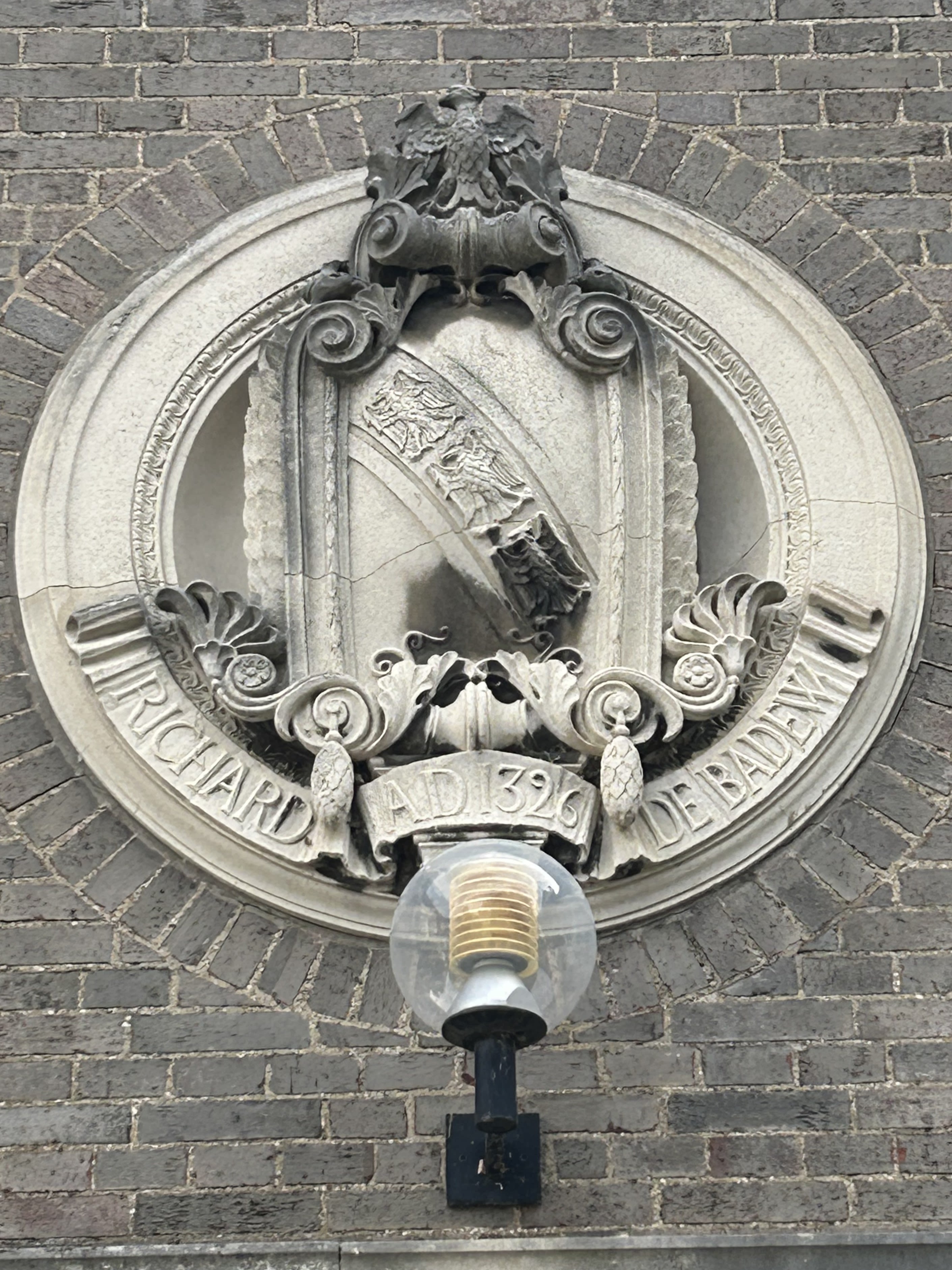
Badew died in 1361, just months after Lady Clare. He is commemorated as the College’s original founder by his coat of arms which is displayed above E staircase in Old Court and in Memorial Court. It is thanks to his generosity of spirit that the College has endured for seven centuries.

 Built with Shorthand