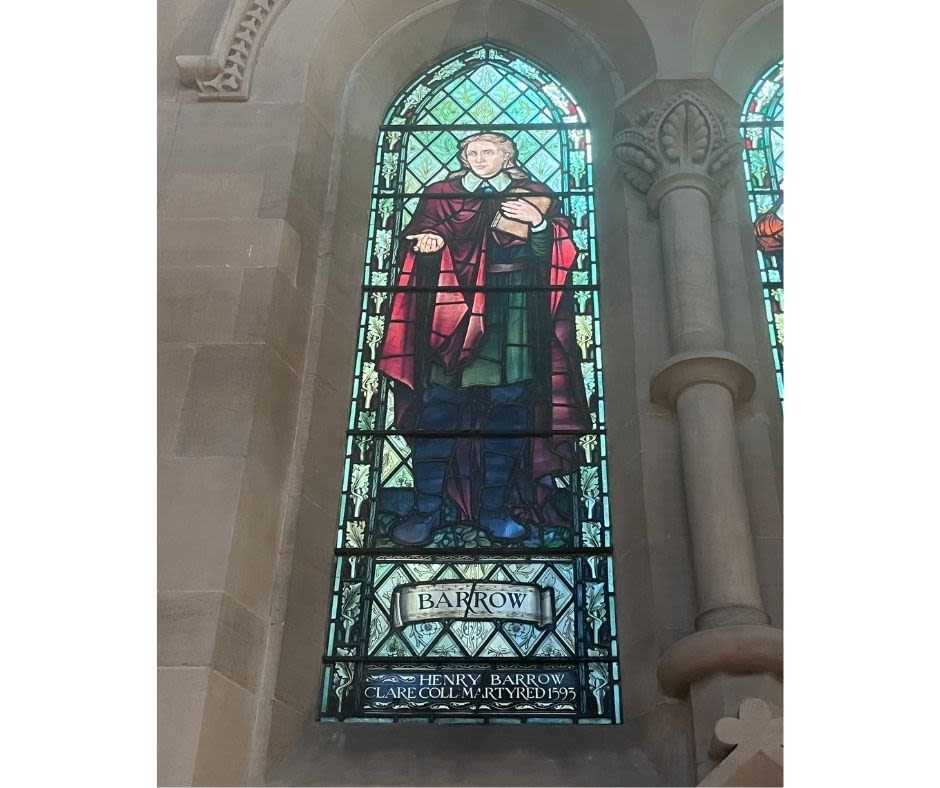
Henry Barrow
1550–1593
A hedonistic student turned Puritan martyr, Henry Barrow was killed for his religious principles.
Barrow matriculated at Clare in 1566 to study law. He is said to have enjoyed life as a student to the full, partaking in long nights of dice games, before graduating in 1570. It is unclear how Barrow entered the Puritan Separatist tradition, considering that he was not a clergyman; according to one account, he entered a church by chance while out walking in 1580, and was converted by a particularly powerful sermon. Whatever the cause, Barrow’s newfound conviction would prove fateful.
In 1587, he travelled to visit a fellow Separatist, John Greenwood, who had been imprisoned for his beliefs. On this journey, Barrow himself was arrested. While in prison he wrote the definitive Separatist work, The Brief Discovery of the False Church. At Barrow’s first trial, Archbishop Whitgift stated he would turn Barrow away from non-conformity; but this proved hopeless. When facing a tribunal in 1589, Barrow did not relent, but defended his cause.
When legal proceedings against Separatism intensified in 1593, Whitgift condemned Barrow and Greenwood to death. They were hanged on 6 April 1593. Undaunted, his fellow Separatists (or ‘Barrowists’ as they were known) committed themselves to following their leader's teachings long after his death.

 Built with Shorthand